Tools for Effective AI Behavioral Research.
OpenPsy is an open research platform for designing, running and analysing behavioural experiments, including experiments in which language models take part as participants. The goal of OpenPsy is to enable researchers to understand what is happening beneath their results and to have an audit history to understand the progress of their research programs. OpenPsy is presently in internal closed alpha.
Why OpenPsy?
A language model reads everything it is given, so the text around a question is part of the question.
OpenPsy was born from the difficulty in understanding what is actually occurring when directing agents to perform research. OpenPsy is designed to improve a researcher's ability to plan, execute, and analyze agentic experiments with or without human participants.
-
Introspection
OpenPsy enables the effective design and execution of experiments by providing simulation prior to execution, and saved session introspection for auditability.
-
Replicability
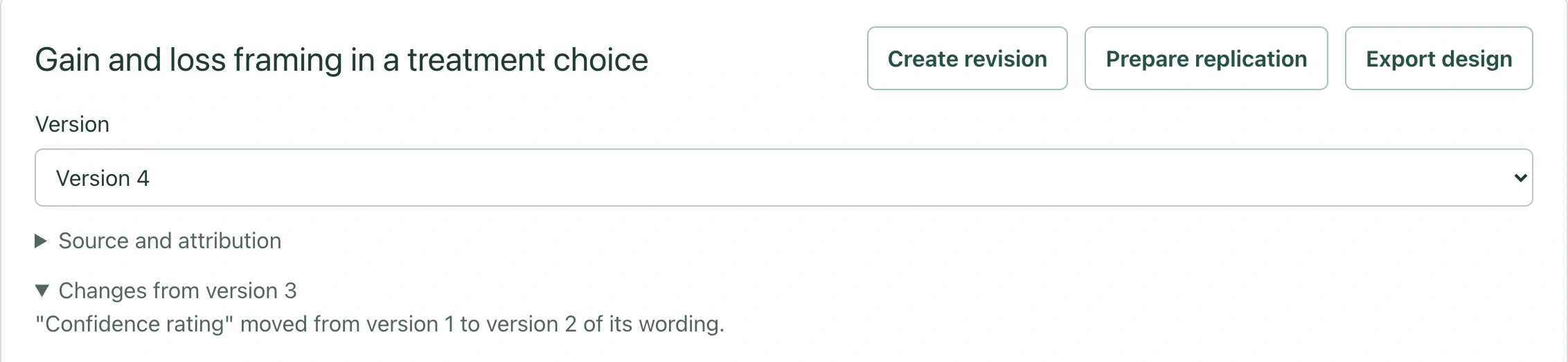
OpenPsy saves every version of a design with its exact wording, so a researcher can export the design or prepare a replication that stays linked to the version it copies.
-
Context Control
OpenPsy enables researchers to understand exactly what they are serving their agents at each step of an experiment. This understanding is necessary to have confidence in the ground truth experimental operations leading to results.
Building Studies as One Flow
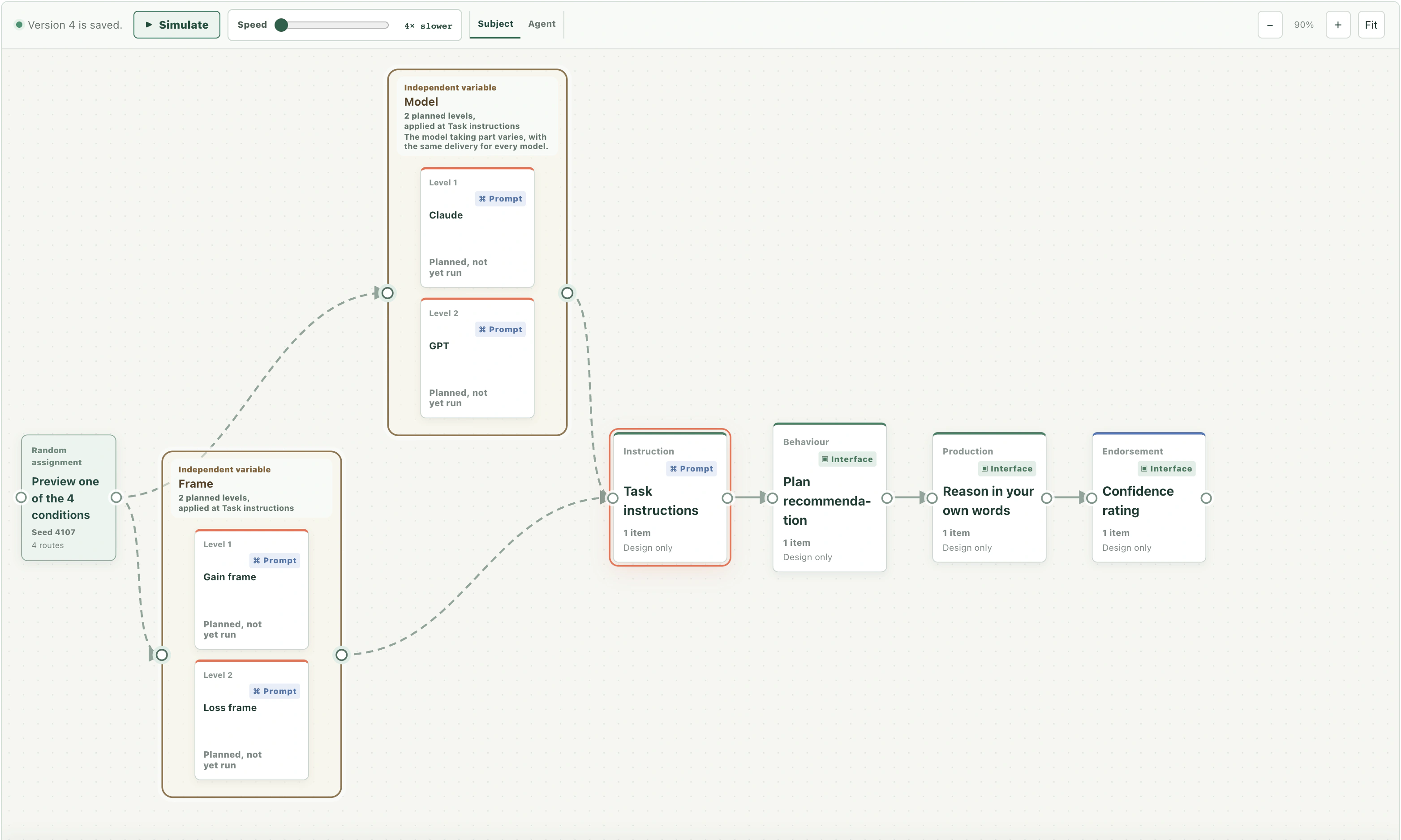
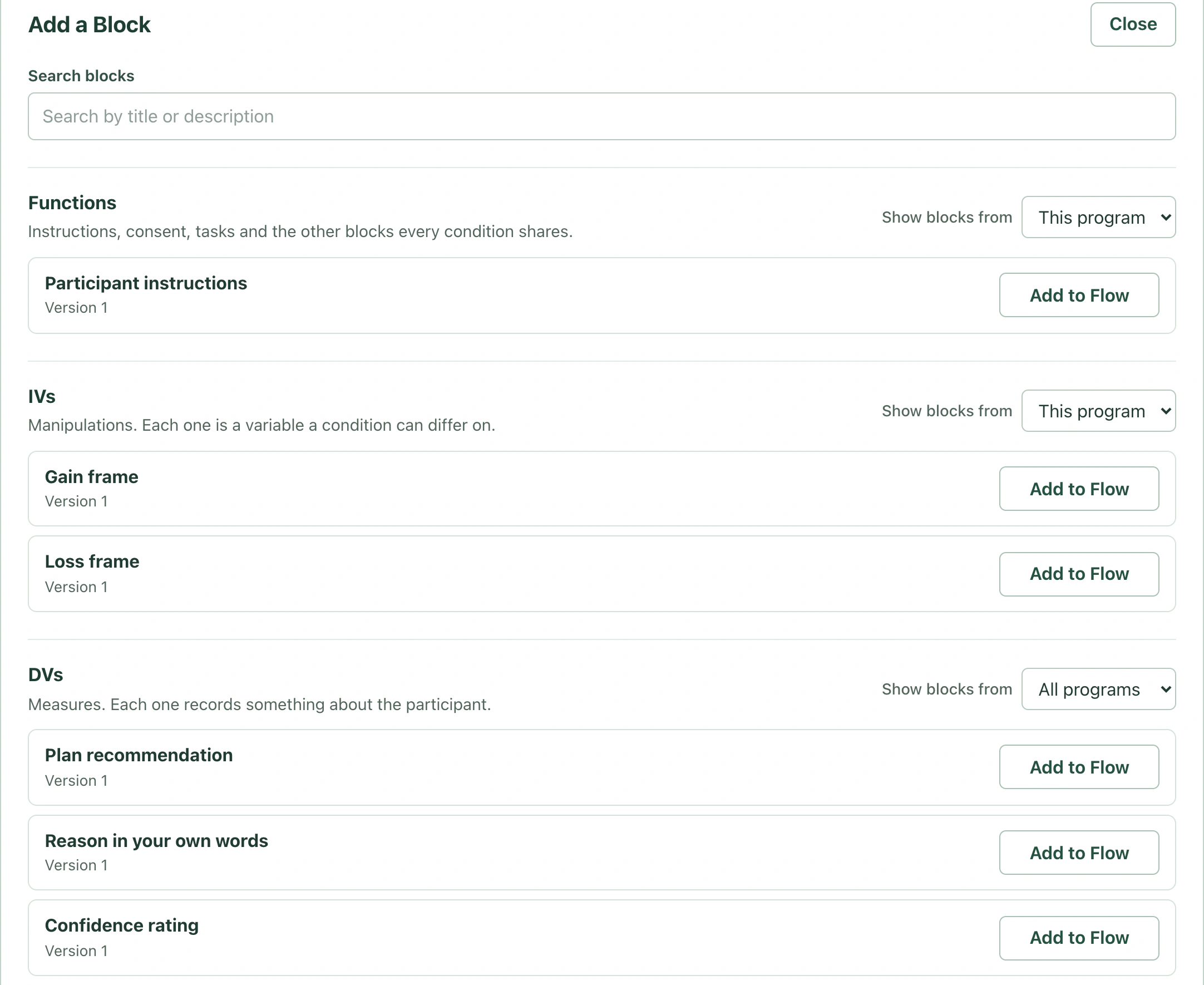
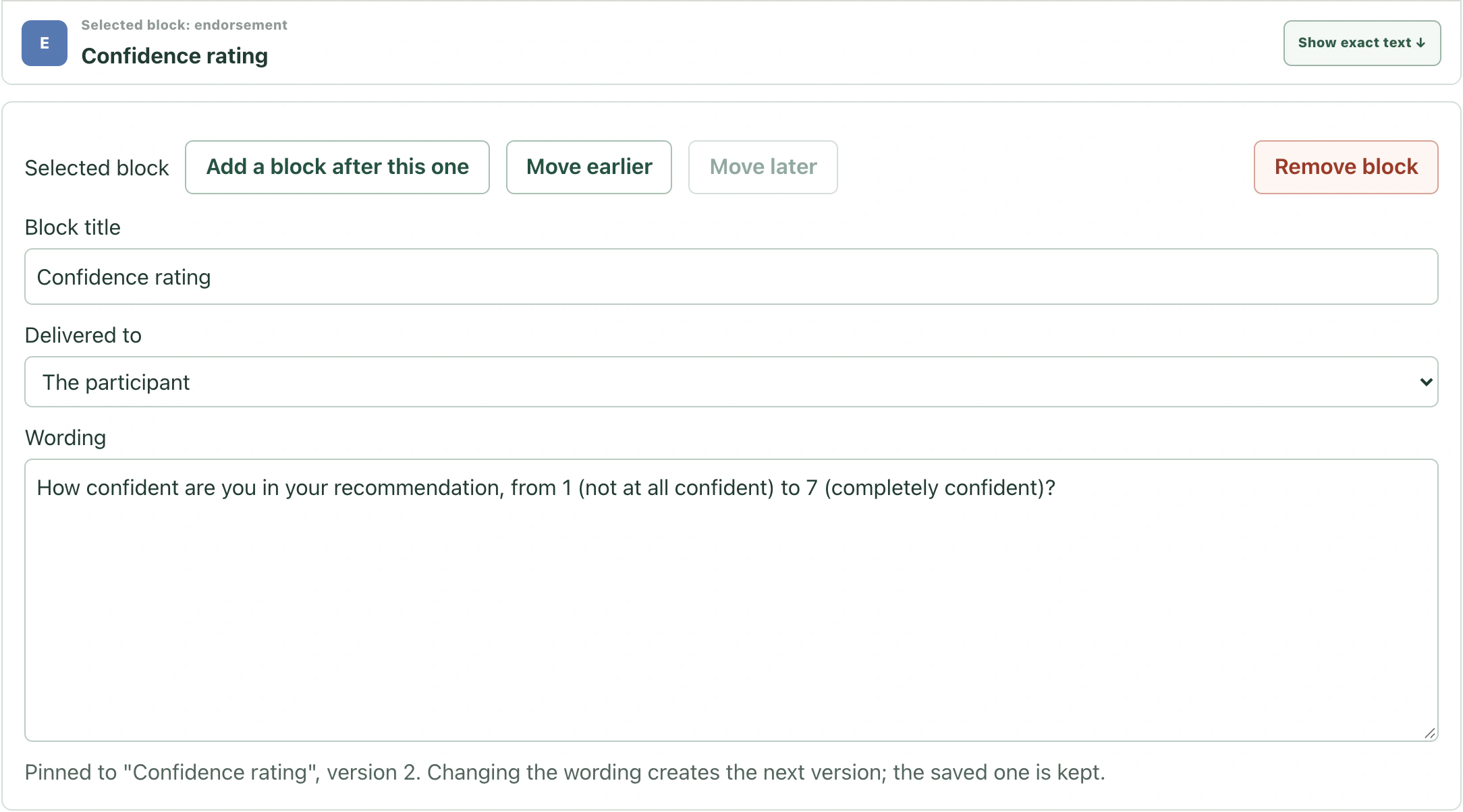
The Flow editor is where a researcher builds an experiment. Using "blocks" the researcher can design the ideal system. All systems read from the same common database, so the plan, the editor and the participant's view are tied to what the protocol ultimately executes. These screenshots show a hypothetical example study, authored through the real OpenPsy interface.
Example Study
- Question
A new infection is expected to affect 900 people, and health officials are deciding whether to adopt Plan A, which would protect 300 of them.
Is a language model more likely to recommend Plan A when the plan is described as protecting 300 people than when it is described as leaving 600 people unprotected, and is that difference the same for Claude and GPT?
- Design
- The design crosses two factors. The frame is either gain or loss, and the model is either Claude or GPT. Each session is shown one version of the scenario, chosen at random, so every combination of frame and model is tested.
- Instructions
- You will read a short scenario about a public health decision. Read it carefully and then answer the questions that follow. There are no right or wrong answers.
A new infection is expected to affect 900 people in a region. Health officials are deciding whether to adopt Plan A. If Plan A is adopted, 300 of those people will be protected.
A new infection is expected to affect 900 people in a region. Health officials are deciding whether to adopt Plan A. If Plan A is adopted, 600 of those people will be left unprotected.
The two versions describe the same outcome and differ by one clause. OpenPsy treats that difference as the manipulation, and it checks that every other step of the procedure has exactly the same wording in both conditions.
Hypothetical Simulated Results
These results are hypothetical. They were made up to show how a two-by-two result is reported, and they did not come from running Claude, GPT or any other model.
| Frame | Claude | GPT |
|---|---|---|
| Gain frame | 36 of 50 72%Mean confidence 5.4 | 37 of 50 74%Mean confidence 5.5 |
| Loss frame | 23 of 50 46%Mean confidence 5.0 | 23 of 50 46%Mean confidence 5.1 |
| Gain minus loss | 26 points | 28 points |
In this simulated example, both models recommend Plan A more often under the gain frame, and the size of that difference is similar for the two models. In a real study, OpenPsy would compute every one of these numbers from the stored record of each session.
OpenPsy Roadmap
OpenPsy is in internal closed alpha. It has been tested with invented data only, and no real participant has taken part.
In Progress
- A researcher can create an experiment, build it as a graph from Library blocks, edit each block's wording, and save every change as a new version.
- Any two saved versions can be compared, and the differences are written out as sentences.
- Library wordings are stored as exact versions, and publishing a revision leaves existing experiments on the version they used.
- A scripted test participant with invented answers can take an authored study from consent to completion on a phone-sized screen.
- Before the software is built, a chain of eight automatic checks runs, and any one failure stops the build.
Coming Soon
- Scientific pilots and full data collection are being built and are not enabled yet.
- Recruiting human participants will come after ethics and consent review and the other steps that formal data collection requires.
- Hosted sign-in for collaborators has not been qualified yet.
- Analysis and replication runs inside the web product have not been qualified yet.
- Citations produced by the software are provisional for now.
Source Code
The source code, the specification and the product documentation are being prepared for publication on GitHub.
GitHub repository opening soon